Best Time for an Everest Base Camp Trek
Spring or autumn? A month-by-month breakdown of temperature, visibility, and crowds on the Everest Base Camp trek to help you pick your dates.
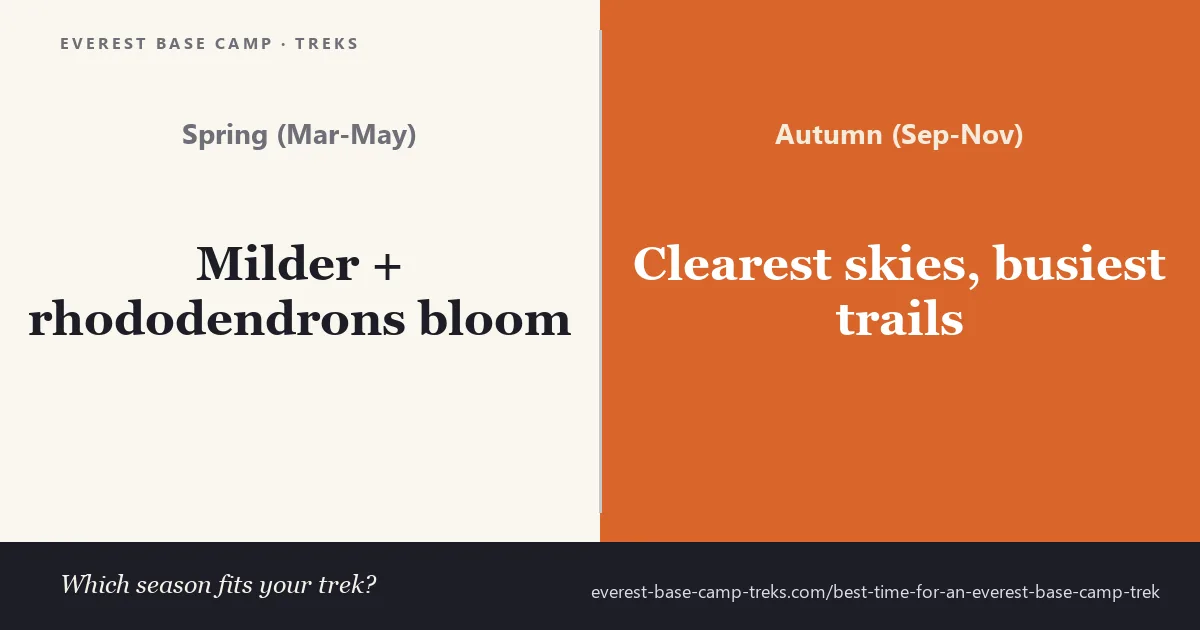
There’s a right way and a wrong way to answer “when should I go?” for the Everest Base Camp trek. The wrong way is a generic “spring or autumn” — true, but not useful when you’re actually booking flights and vacation days. The right way accounts for what changes month to month at altitude: temperature, snowfall, visibility, and how many other trekkers you’ll be sharing the trail with. Here’s the real breakdown.
Check Availability
The Two Trekking Seasons, and Why They’re Different
Spring (March–May) and autumn (September–November) are the two windows when the Khumbu is reliably trekkable, and they feel noticeably different on the ground.
Autumn (late September–November) arrives right after the summer monsoon has washed the dust and haze out of the air. This is the season locals and guides tend to recommend first if mountain photography is your priority — the skies are at their clearest, and the classic Everest-from-Kala-Patthar shot is most likely to actually look like the postcard. October in particular sees the heaviest trekker traffic of the year, since it combines good weather with the tail end of Nepal’s own festival season (Dashain and Tihar).
Spring (March–May) trades a little visibility for warmer daytime temperatures and rhododendron forests in bloom lower in the valley — a detail autumn trekkers miss entirely. Spring is also when Everest’s climbing expeditions are active, which means more helicopter traffic near Base Camp and a livelier atmosphere in Gorak Shep and Base Camp itself, but slightly hazier long-range mountain views than October delivers.
Month-by-Month Temperatures
Altitude does more to temperature than season does — Namche Bazaar (3,440m) and Dingboche (4,410m) can differ by 10°C or more on the same day. Here’s what to expect at each:
| Month | Namche Bazaar (day / night) | Dingboche–Base Camp zone (day / night) | Conditions |
|---|---|---|---|
| December–February | 2–8°C / -5 to -10°C | -10 to 4°C / -20 to -25°C | Cold, clear, very few trekkers |
| March | 5–12°C / -3 to -8°C | -5 to 10°C / -15°C | Trails opening up, still cold at altitude |
| April–May | 10–15°C / -2 to 5°C | 5–15°C / -10 to -15°C | Peak spring, warmest reliable window |
| June–August (monsoon) | 12–16°C / 0 to 5°C | 5–16°C / -1 to 5°C | Rain, cloud, leeches lower down — not recommended |
| September | 10–14°C / -2 to 3°C | Similar to spring, drying out | Transitional, monsoon tail |
| October–November | 8–15°C / -5 to 0°C | 0–12°C / -10 to -15°C | Clearest skies, busiest trails |
Regardless of season, expect nights well below freezing anywhere above Dingboche — a sub-zero-rated sleeping bag isn’t optional (see our packing list guide for specifics).
What to Avoid: Winter and Monsoon
Winter (December–February) isn’t impossible — a few operators run winter departures, and the trails are near-empty — but expect serious cold, with Base Camp area nights regularly dropping to -20°C or colder, and a real risk of teahouses along the upper route closing for the season. Only consider it if you’re an experienced cold-weather trekker.
Monsoon (June–August) is the season to skip outright. Low cloud blocks the mountain views that are half the reason to do this trek, the lower trails turn muddy and leech-prone, and — critically for anyone flying via Lukla — poor visibility causes the most flight delays and cancellations of the year. If your dates are flexible at all, avoid this window.
Crowds vs. Solitude
October is the single busiest month on the trail — teahouses in Namche, Dingboche, and Lobuche can fill up during peak weeks, and it’s worth booking your trek (and ideally your teahouse stops) well in advance if you’re set on this month. Late November and April offer a good middle ground: still within the reliable weather windows, but noticeably quieter than the October peak. If solitude matters more to you than perfect visibility, the shoulder weeks at the edges of spring and autumn are worth considering.
Our Recommendation
If you can only pick one month, late October to mid-November gives you the best combination of stable weather, clear mountain views, and (mostly) manageable trail traffic. If you’d rather trade a touch of haze for milder temperatures and blooming rhododendrons, April is the spring equivalent. Whichever you choose, build in at least one buffer day around your Lukla flights — weather delays there are common in every season except deep winter, and a missed connection can cost you your international flight home.
Ready to Book?
Once you’ve picked your season, compare the guided Everest Base Camp treks available for those dates — every itinerary listed includes a licensed guide, permits, and teahouse lodging, with free cancellation if your plans change.
Trek to Everest Base Camp — Guided, Grounded, Unforgettable
Join trekkers who rated this 12-day Everest Base Camp adventure 5.0/5. Licensed Sherpa guide, Lukla flights, and teahouse lodging included. Free cancellation up to 24 hours before departure.
Check Availability & Book