What to Expect on the Everest Base Camp Trek
A realistic, day-by-day picture of the Everest Base Camp trek — altitude, daily distances, teahouses, food, and how acclimatization actually works.
Booking an Everest Base Camp trek is easy. Knowing what the actual days look like — how far you’ll walk, where you’ll sleep, how your body handles the altitude — is what separates trekkers who arrive prepared from those who are blindsided halfway up. Here’s a realistic, unglamorized picture of what to expect.
The Route, in Broad Strokes
Every itinerary on this site follows some version of the same path: fly from Kathmandu to Lukla’s Tenzing–Hillary Airport (2,860m), then walk north through the Khumbu Valley — Phakding, Namche Bazaar, Tengboche, Dingboche, Lobuche, and Gorak Shep — before the final push to Everest Base Camp (5,364m) and, on most itineraries, a pre-dawn hike up to Kala Patthar (5,545m) for the classic sunrise view of Everest’s summit. Then you retrace your steps back to Lukla and fly home.
Check Availability
A Typical Day
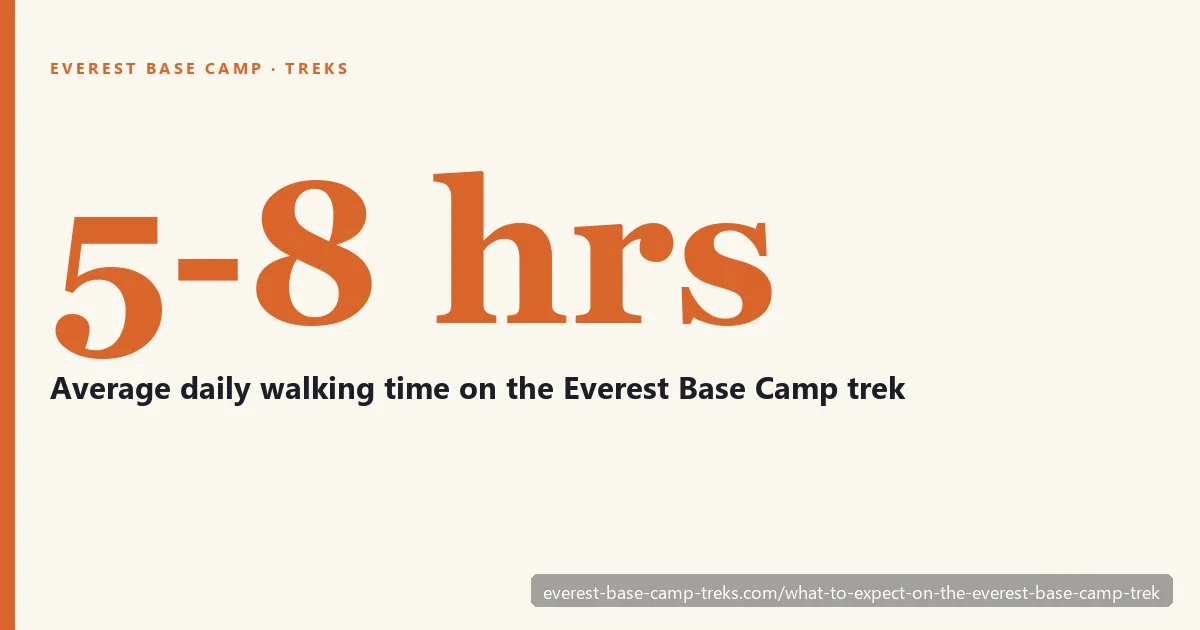
Most trekking days run 5–8 hours, starting early — often before 7am, both to make the most of clear morning weather (afternoons tend to cloud up in the high Khumbu) and to reach the next teahouse before dark. Trails are well-established and non-technical: no ropes, crampons, or climbing skills are required at any point on the standard route. That said, the terrain is real mountain trail — loose rock, stone steps, exposed sections along river gorges, and long, grinding uphill stretches that feel harder with every meter of altitude gained.
Porters are available on nearly every itinerary to carry the bulk of your gear, so most trekkers walk with just a daypack — water, snacks, camera, and layers for the day’s weather swings.
Altitude: The Real Challenge
Distance and elevation gain are only part of the story. What actually determines whether you reach Base Camp comfortably is acclimatization — giving your body time to adjust to progressively thinner air. Every well-built itinerary includes at least two full rest days, typically at Namche Bazaar (3,440m) and Dingboche (4,410m), where you sleep at the same altitude two nights running rather than climbing further.
Mild symptoms — headache, fatigue, disturbed sleep — are common above 3,500m and usually pass with rest and hydration. Your guide is trained to watch for the warning signs of more serious altitude sickness (persistent vomiting, confusion, loss of coordination) and has the authority to slow your itinerary or arrange a descent if needed. Being honest with your guide about how you’re feeling — rather than pushing through symptoms to keep pace with a group — is the single most important thing you can do to protect yourself.
Where You’ll Sleep and Eat
Accommodation is in teahouses — family-run guesthouses in every village along the route. Rooms are simple: usually twin beds, a shared bathroom (Western-style toilets become rarer the higher you go), and no heating beyond the communal dining room’s wood or yak-dung stove in the evening. Don’t expect hot showers above Namche without paying extra, and expect Wi-Fi to be slow, patchy, or an added fee.
Food centers on dal bhat — rice, lentil soup, and vegetables, often with unlimited refills — which most guides recommend eating daily since it’s freshly cooked and easiest on your stomach at altitude. Menus also typically include noodle soups, fried rice, momos (dumplings), and basic Western comfort food like pancakes or pasta, though prices climb steadily the higher and more remote the village.
Temperature and Weather
Even in the best trekking months, nights above 4,000m regularly drop below freezing, and teahouse rooms are unheated — most of your evening warmth comes from bundling into a good sleeping bag rather than the building itself (see our packing list for gear specifics). Days can swing dramatically too: bright sun at altitude can feel warm even in freezing air, but that same afternoon can turn windy and overcast within an hour. Layering is non-negotiable.
The Lukla Flight Factor
The short flight between Kathmandu and Lukla is famous for weather delays — low cloud or wind can ground flights for hours or, occasionally, days, especially in monsoon season. Well-built itineraries account for this with buffer days, but it’s worth mentally preparing for the possibility that your trip’s tightest schedule pinch point isn’t the trekking at all, but the flights bookending it.
The Payoff
None of this is meant to discourage — it’s meant to set realistic expectations so the hard parts don’t derail your trip. The reward is real: villages that feel genuinely lived-in rather than staged for tourists, conversations with Sherpa guides and porters who’ve spent their lives in these mountains, and a final morning at Kala Patthar watching the sun hit Everest’s summit that most people only ever see in photographs.
Ready to Book?
Browse the guided Everest Base Camp treks available, each with a licensed guide, built-in acclimatization days, and teahouse lodging included.
Trek to Everest Base Camp — Guided, Grounded, Unforgettable
Join trekkers who rated this 12-day Everest Base Camp adventure 5.0/5. Licensed Sherpa guide, Lukla flights, and teahouse lodging included. Free cancellation up to 24 hours before departure.
Check Availability & Book